

Continue reading “Italian American Strega Lori Bruno”
Folk Art and Heritage in Massachusetts


Last week I had the good fortune of introducing Stephen Wade at the Cambridge Forum in Harvard Square. Like an archaeologist revisiting a dig site 75 years later, Wade went back to 13 Southern towns where folklorists working for the Library of Congress had recorded locally known singers and musicians. These field recordings went on to become iconic of Southern old time banjo and fiddle music, blues, children’s lore, cowboy songs, and other forms of American folk music.

In addition to doing some serious library research, Wade was able to track down living relatives or acquaintances, finding himself in places where everyday people made music: living rooms, front porches, church pews, prisons, and dance halls. During his November 13 presentation in Cambridge, he told stories from his travels in researching and writing The Beautiful Music All Around Us: Field Recordings and the American Experience. He also performed on a number of banjos, including one originally belonging to musician Hobart Smith. Take a look and listen —

Journey from 1965 Cambodia to present-day Lowell and experience the transformation of an art form, once almost lost. Our next Lowell Folklife Series takes place on November 19, 2013 at the Visitor Center at Lowell National Historical Park. We begin by screening a 1965 documentary portraying the Royal Ballet of Cambodia. At the time of filming, the ballet performed exclusively for the elite and was patronized by the queen of Cambodia.
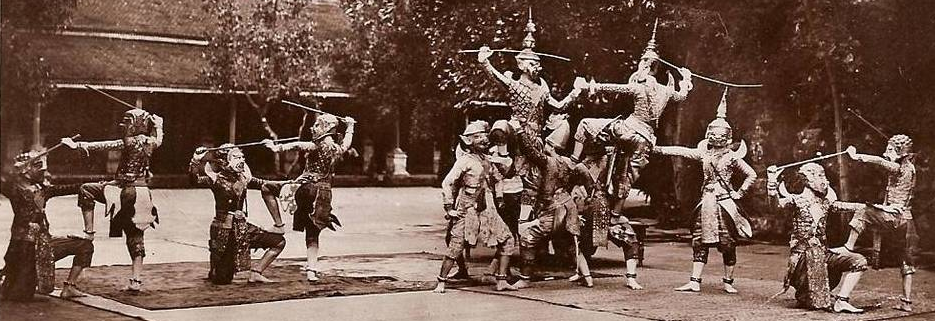
Scenes show royal dancers being trained, masks and costumes being made, rehearsals, and the indoctrination of novices into the service of dance. Among several pieces portrayed in the film is the Apsara Dance, which features a special performance by Princess Bupphadevi.
Following the screening November 19th, audience members will be treated to a live performance by members of Angkor Dance Troupe. This screening is the first in the ” Evolution of Cambodian Dance Film Series” presented by Angkor Dance Troupe.
6:00 p.m. Welcome & introduction
6:15 p.m. Film Screening
7:45 p.m. Live dance performance
Come join us. The event is free and open to the public. For information about Teacher Professional Development Points, contact the Tsongas Industrial History Center: TIHC@uml.edu

Guest blog by Dawn Spears,Program Manager, Native Arts, New England Foundation for the Arts (NEFA)

The Native Arts program at NEFA has partnered with the Mashantucket Pequot Museum & Research Center(MPMRC) on Native New England Now, an exhibit featuring many of New England’s Native American artists who have been supported through NEFA’s Native Arts program. The exhibit is up through January 4, 2014.


This is a rare opportunity for an organization to be able to showcase the work it supports, and we are grateful for the partnership and expertise of MPMRC. It allows the visitor a quick immersion into our world, to showcase our artists and the work that is happening now. The work here and the work supported in our program represent our master artists, our elders, our youth, our emerging artists, and those in between.
The exhibit of NEFA-supported work, which has been a goal of mine for a while, was the result of a conversation with MPMRC. Fast forward through a lot of work by the museum and NEFA staff together: contacting grantees, other museums, working on image collection and object curation, and collecting the artist statements. It’s been a true community effort that would not have happened without the support of our artists, the museum, and those who have loaned from their collections (the Abbe Museum, the Hood Museum), or their own private collection. It was an intense and exciting period, but with an amazing team and eyes focused on the opening, I could not be more proud of the result.

Personally, I can’t say enough about the art that is happening in New England. It’s our home, and what you see in this exhibit really represents the love of our land and its gifts. The work that is happening represents this connection to our land, our resources, our cultures and heritage, and, in reality, to our future.
It was such an honor that so many of the exhibited artists attended the opening reception , along with program advisors, funders, museum officials, NEFA board members, and my own NEFA colleagues. I’m hopeful that we will have similar participation at the artist panel discussion on November 16 and the holiday artisan market on November 30!

This exhibit shows the work of 28 of the over 80 artists and organizations – representing over 35 tribes – that have received grants from NEFA’s Native Arts program. You can learn more about the artists in the companion book we published, but the best way for you to really understand the work that has come from this love – and really see the talent and creativity of our amazing artists – is to see it in person.
NEFA’s Native Arts program supports projects that nurture artistic exchange, community development, youth engagement, environmental resource research and preservation, cultural preservation, and artistic innovation. Special thanks to the Ford Foundation, the National Endowment for the Arts, the six New England state arts agencies, the Native Arts and Cultures Foundation, and other Native Arts program funders.
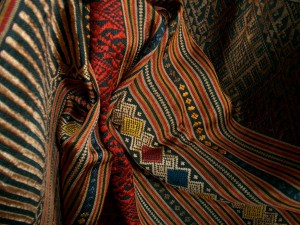
Come join us for a film, a hands-on weaving experience, and a faciliated conversation about the complex meanings of cultural heritage for refugees.
Mone Saenphmmachak is a master weaver. She is also a Lao refugee, tormented by survivor guilt. Resettled in St. Louis during the 1980s, she finds factory seamstress work sewing gun holsters. In her precious spare time, she weaves traditional Lao skirts and teaches the next generation of Laotian children. Winning a National Heritage Award in 1993, Mone ultimately chooses to give up her looms.
Weaving Bitter with the Sweet is a moving documentary film that explores the refugee experience and its impact of sustaining cultural heritage. The film invites viewers to “unpack” assumptions about the meaning of cultural heritage for refugees — a topic with the potential to resonate with many re-settled communities here in Lowell.
7:00 p.m. Welcome & introduction
7:15 p.m. Hands-on weaving experience
7:45 p.m. Film screening
8:15 p.m. Facilitated conversation
This Lowell Folklife Series event is co-sponsored by Lowell National Historical Park, Lowell Film Collaborative, Tsongas Industrial History Center, & Massachusetts Cultural Council.
For more info, call 978-275-1719.
For information about Teacher Professional Development Points, contact the Tsongas Industrial History Center: TIHC@uml.edu
We are coming up on the last week of September, which means it’s time for the annual feting of our country’s National Heritage Fellows. This year’s fellows include former Massachusett’s resident and Irish fiddler extraordinaire, Seamus Connolly.
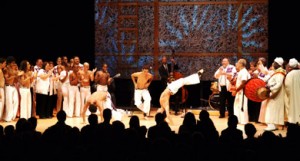
The National Council for Traditional Arts and the National Endowment for the Arts produce a spectacular evening performance September 27th at Lisner Auditorium on the George Washington University campus. Fortunately, for those unable to attend the concert, the event will be live streamed at arts.gov, with an archive available following the event. Viewers can share comments and photos on
Twitter using the hashtag #NEAHeritage. You may also request copies of
the concert program by emailing heritage@arts.gov.

Qianshen Bai is a demanding teacher. Leaning over his apprentice’s brush work, he points out tiny things, “This is the problem. Her problem here is that here, so far so good, and she move this way, see the brush toward this part? The stroke should keep in the same direction. You see? You need to use finger and wrist. . . This kind of work is an illusion. The trick is, where this stroke came from, because calligraphy is art of movement.”

Although there are still quite a few people who practice calligraphy for leisure, very few take the time to study, in depth, the history and various aspects of the art of writing calligraphy. Mei Hung, Executive Director of Chinese Culture Connection, is one of those people. In September 2013, Qianshen Bai and Mei Hung were awarded a Traditional Arts Apprenticeship by the Massachusetts Cultural Council.
In addition to learning the subtleties of the techniques in writing balanced and artistic calligraphy, Mei Hung learned to appreciate a piece of good work with a critical eye. During their 8-month apprenticeship, Mei was introduced to writing couplets, horizontal banners, and, in a smaller font, on fan shaped calligraphy. In addition to learning how to compose the writing in various styles, she completed the composition with date and signature, and the proper way to apply the seal.


For Mei Hung, having had such a direct experience with master calligrapher Qianshen Bai has been a privilige. “Now I understand that the art of writing calligraphy can be related to playing music, practicing Tai Ji . . .To do it well is a total harmonious relationship among one’s intent, the brush, the ink and the paper. Professor Bai described it this way: the “brush dances and the ink sings.”

This apprenticeship enhanced my knowledge of the art and improved my writing skills, but most importantly, it made me feel humble. It is truly an art that requires a life long practice.” Perhaps, most importantly, Mei mastered a method of how to learn calligraphy by herself in the future.
The next deadline for Traditional Arts Apprenticeship grants is April 2014.
Earlier this spring I was searching for someone who specializes in the tradition of carving fruits and vegetables to demonstrate at the folk craft area of the Lowell Folk Festival. This year the theme is carving traditions. After following up on a few leads, all within the Asian community, I eventually gave up on trying to find someone to demonstrate this culinary skill.
Then, just six weeks shy of the festival, I received an email from Craig Gates of the Lowell Festival Foundation. He’d been contacted by Ruben Arroco inquiring whether he could demonstrate fruit carving at the festival this summer. Serendipity? As it turns out, Ruben recently demonstrated fruit carving at the Rock ‘N Ribfest in Merrimac, New Hampshire. When someone came up to him to ask if he would be at the Lowell Folk Festival this July, he thought to himself, “Why not?” Hence, his inquiry. Craig passed him on to me, with the thought that it was probably too late and that I could “let him down gently.” Instead, I was thrilled to learn of this local chef who had trained in the Philippines, has been an executive chef for 30 years, and now specializes in customized fruit and vegetable carvings.

So last week, Phil Lupsiewicz and I drove over to the Highlands neighborhood of Lowell to interview Ruben Arroco. Ruben, his wife, and daughter live in a newly built enclave of condominiums tucked into some lush foliage just off a busy street. Ruben welcomed us in, offering us freshly brewed coffee and slices of tiramisu cake. Presentation was done with the utmost care; the cake was served on white porcelain plates decorated with mango carved to look like roses. Amazed at the trouble he had gone to and delighted in sitting down to this unexpected afternoon treat, Phil and I readied our recording equipment.

Ruben placed a round watermelon on a rotating board, securing its base with a rolled dishtowel. Then he picked up a very sharp tool and began to work. “I just start by looking for a nice surface and just make a little peel. I peel that until I see a little red color. Like so. . . I’m going to make the center petals of the flower. Most of the time they use a knife to make a circle – but I just use a cookie cutter to make a round shape. This is how it’s started. See, I love that color right there, it’s coming out, the red color. Then you start making the petals. . . ”
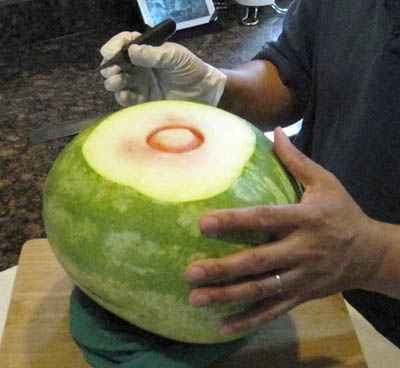

Ruben makes most of his own carving tools out of specialized stainless steel. I ask if fruit carving is a relatively rare skill to have. “It is. This is actually a 700-hundred year old art that originated in Thailand.”


Ruben learned to carve fruit during his training as a hotel chef in the Philippines. “There is a place in the Philippines — Paete, Laguna — where people there make a living out of carving wood. Some of those guys, I was lucky enough to work with in the hotel. . . If you see a chef doing this, most of the time, if you ask, ‘Are you from [Laguna]’ the answer is yes. If you can carve wood, you can carve this — so I kind of learned it from them.”
Ruben picks up a specialized tool he made which creates V-cuts in one movement. “Even just making simple V-cuts transforms it and gives it that nicer look. You go around making these V-cuts, like that. Separation of the petals from the part that you carved, that’s very important. The part that is removed, they call that the negative side in the carving world. If you don’t remove that, you won’t see what you just carved.”

I wonder aloud if there is something hard about making art which is so ephemeral. It can take from seven to ten hours to create, yet it’s there to be consumed. Ruben says, “Even though it takes a long time to make, the best part of it is when we bring it to the party and everybody likes it. Even though it took me seven hours to make, it always feels like it only took me a half hour when everybody likes it.”
“Most of the time, we bring it to the party and then they call me back say, ‘We have a problem.’ ‘What? Why, what happened.?’ ‘Nobody wants to touch it!’ So I tell them to find a kid and tell him or her it’s for them. They won’t care; they’ll just start eating it.”

Come to the Lowell Folk Festival this July 27 and 28 to watch Ruben and 15 other traditional artists demonstrate their remarkable carving skills.
Come to this summer’s Lowell Folk Festival next weekend and seek out the Folk Craft & Foodways area, which is located in Lucy Larcom Park, not far from Boarding House Park. Under the shade of big tents, you will discover 16 traditional artists who spend their days carving in a variety of media (wood, stone, clay, plaster, & fruit). Like ornamental woodcarver David Calvo . . .


stonecarver Jesse Marsolais . . .
and Chinese seal script carver Wen-hao Tien.

The majority of the carvers demonstrating their skills on Saturday and Sunday (July 27 – 28) work with hand tools — gouges, chisels, knives, and rasps. One carves with the help of an electric powered lathe. You will see whimsical carvings revealing dazzling skill, religious figures to aid worship, ornamental elements to enhance architectural trim (and hide joints) and figurative carving depicting wildlife, logging traditions, and more.


As you visit the craft area, see if you can discern the place of origin for each of these carving traditions whose techniques and styles originated in Italy, Greece, Japan, French Canada, Puerto Rico, England, Cambodia, and China. Ask questions. What role does design and drawing play in producing carved art? How are these individual artists able to sustain their craft in today’s globalized, mass-produced marketplace?


Bread may be the staff of life, but fried dough is its treat. Fried dough is often associated with summer fairs and carnivals, where it’s made in vats of hot oil. But this seemingly generic food has roots in many cultures. Varieties of fried dough made in local home kitchens are part of the foodways of cooks with African-American, Greek, Italian, Polish, and Portuguese roots.
Fried breads are made with yeast dough or flour, which is shaped and transformed by frying. Frequently the small, often bite-sized confection is finished off by being rolled in toppings such as honey, sugar, cinnamon, or the sweeteners are sprinkled on top. There’s no such thing as leftovers where fried dough is served!
Come to Foodways Tent this July’s Lowell Folk Festival and you’ll have a chance to see and taste five different versions of fried dough.
COOKING DEMONSTRATIONS:
12:00 p.m. Eleni Zoldi, Greek loukamathes
1:00 p.m. Lucia DiDuca, pizza fritta
2:00 p.m. Natalia Cardosa, Portuguese filhoses & malassadas
3:00 p.m. Lilly Morales, African American hoe cakes and hush puppies
4:00 p.m. Mary Matyka with Helen Dubuc, chrusciki
