The Wisdom of Hands

Alma Boghosian, who turned 100 this past July, continues to make lace collars, doilies, and handkerchiefs without the use of patterns.

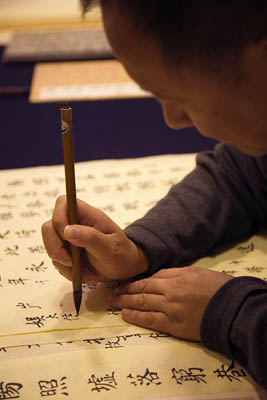
Qianshen Bai practices the ancient art of Chinese calligraphy. “The art really demands someone in a very peaceful state of mind. Second, you try to reach a state in which your mind and your hand are in a very harmonious relationship.”

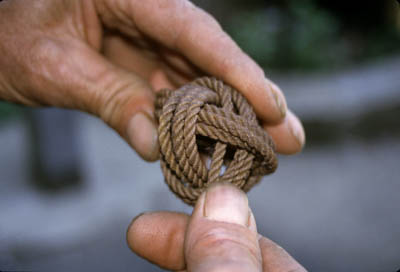
Retired fisherman Marco Randazzo discovered that his facility in tying nautical knots lent itself to making sculptural objects out of rope.

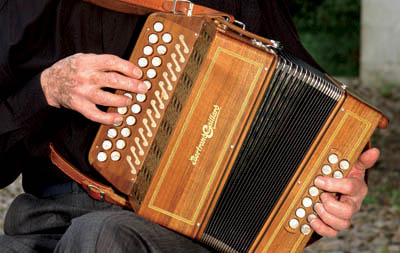
The Irish “button box” in the hands of Joe Derrane is a powerful thing. Considered one of the best Irish accordion players on either side of the Atlantic, Derrane’s playing packs a punch.

“Gaelic Roots” lives on in concert series

It has been six years since the wonderful “Gaelic Roots” was last held at Boston College. Seamus Connolly put his heart and soul into gathering some of the most talented Irish and Scottish musicians, singers, and dancers for a week of performances, lessons, late night sessions, and an all round great time. Though “Gaelic Roots” week no longer takes place, a top-knotch concert series throughout the year does — and it is free to the public. Concerts take place in the historic Connolly House in Chestnut Hill, Massachusetts. An intimate space which basically feels like a house concert.

Tomorrow evening, February 10, the Center for Irish Programs presents Donna Hébert — Traditional Franco-American, Northern, and Contradance Fiddle Music.” A third-generation Franco-American, Donna Hébert co-founded two music groups, Chanterelle and The Beaudoin Legacy. A versatile performer, teacher, and author, Donna Hébert received a 2008 Massachusetts Artists’ Fellowship in the Folk Arts from the Massachusetts Cultural Council. Performing on fiddle and vocals, Donna Hébert will be joined by Max Cohen (guitar and vocals) and Jeremiah McLane (accordion and keyboard). For more information about the series this spring, go to the Gaelic Roots website.

Ready for some color in your life?

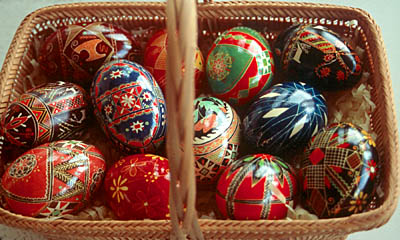
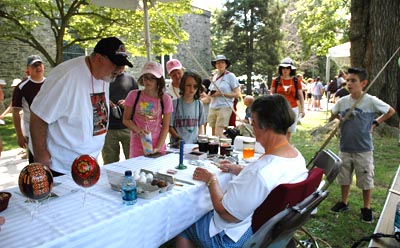
Or at least in your eggs? Carol Kostecki will demonstrate the wax-resist process of decorating Easter eggs known as pysanki on Saturday, February 7th, from 1:00-3:00 p.m. at the National Heritage Museum in Lexington, Massachusetts. This tradition, associated with Ukrainian church communities, came to Kostecki by way of marriage despite her own French-Canadian, German, and Abenaki descent. She is featured in the exhibition, Keepers of Tradition. Free admission. Snow date: Sunday, February 8.

Summer Teacher Institutes in Folklife and Folk Arts

A growing number of teacher training institutes in folk arts, folklife, and oral history are being offered each summer across the country. Last summer, here in New England there were a number of teacher training opportunities, including ones in Massachusetts (Explorations in Puerto Rican Culture, July 14-18), New Hampshire (Celebrating Heritage: Creating and Producing a Community Festival, July 8-29), and a series of institutes in Vermont (Place as the Context, Service Learning as the Strategy, Sustainability as the Goal.) If you have information about this summer’s workshops, please contact C.A.R.T.S. website – which stands for Cultural Arts Resources for Teachers and Students. They are compiling the summer’s offerings.

Dollmaker returns to Massachusetts

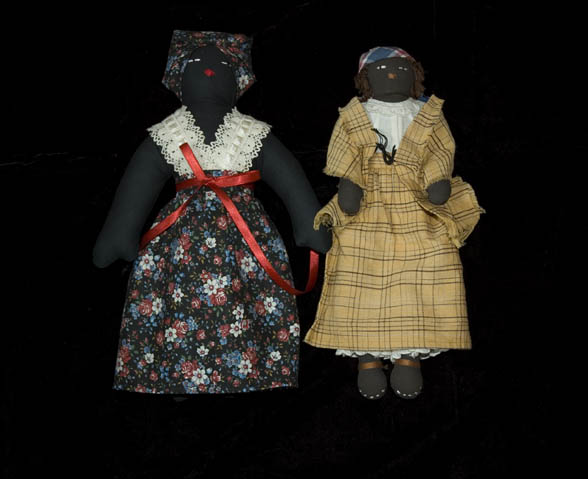
Ivelisse Pabon de Landron is passionate about many things in her Puerto Rican heritage. Most tangible is her making of black dolls like the ones shown here. Having learned doll making from her mother, Ivelisse went on to do extensive research on the Puerto Rican black doll, and eventually met with older doll makers in Puerto Rico. She is passionate about preserving the history of the black doll as a way of honoring Puerto Rican women of African descent and their contribution to Puerto Rican cultural history. For example, the women’s role as slaves on sugar plantations, as la comadronas (midwives) and as la jibara (country peasants.)

Born in New York, Ivelisse grew up in the barrio of the Lower East Side, where her mother was a community organizer. As an adult, Ivelisse relocated to Massachusetts, but in 2000, she was inspired to move to Puerto Rico. “I wanted to know about my heritage. I wanted to understand the culture, because my dad was black and my mom was white. Also, because there was something missing. I found out that what was missing was that I didn’t know where I came from. I wanted to know why the culture was the way it was — the music, the food, the dancing.” After doing ancestral research in old church records, Ivelisse learned that she is the great great-grandaughter of a woman who was brought to Puerto Rico in 1834 from Africa to work in the sugar plantation in Vega Alta.

After arriving in Puerto Rico, Ivelisse sought out older doll makers to learn from them. She eventually marketed her dolls at the Plaza in Old San Juan. Ivelisse has moved back to Massachusetts and is eager to share what she has learned of Puerto Rican traditional culture.

.

Photos by Maggie Holtzberg

Chairmaking Once Pride of City

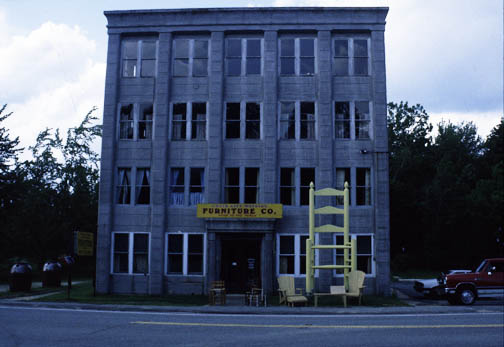
Today’s Boston Globe paints a less than promising picture of the state of furniture making in Gardner. Nicknamed “Chair City,” many of the large furniture companies have closed down, leaving Gardner without its core industry which once was such a sense of pride. One of the oldtimers still weaving rush seats on ladder back chairs is Len Curcio. He owns Wayside Furniture, a company founded by his father over 60 years ago.

Back in 2000, folklorist Tom Carroll did some field research in Worcester County for us, including a visit to Wayside Furniture to meet with Len Curcio. He saw Curcio’s work as a continuation of the very significant chair and furniture making industry of Gardner and the surrounding area. In contrast to some of the larger scale facilities that once existed in town, Wayside still maintains a hand crafted element in their production processes.

I
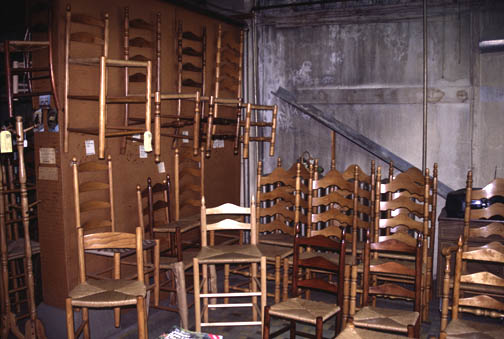
In creating the woven rush seat, Len Curcio works by wrapping a length of fiber around a shuttle, then passing through the opening where the chair seat will be. Keeping “equal pressure, equal pull” is key. “You have to have an affinity for it, cause it’s rough on your hands,” Mr. Curcio told Tom. “It’s the center part I’m looking at. The hole, not the weave.”

The involves passing the shuttle under the open seat and forming an “X” by applying material to each corner and gradually building the corner out toward the center. After every other pass, Mr. Curcio uses a metal wrench, or iron, to tighten the weave against the corners. Once the weave is completed, Curcio uses the “stuffer,” an elongated wooden implement, to pack newspaper strips into the bottom of the weave. “A chair is a total paper product,” Mr. Curcio explained. Once the stuffing process is completed, he uses the buffer to rub the finished weave to crea a smooth, relatively even surface.

Photos by Tom Carroll, 2000.

Cape Ann Bird Watching Weekend

A wonderful opportunity to go bird watching in Cape Ann will take place January 30 through February 1at various sites throughout Cape Ann. The area is known by birdwatchers for its concentration of winter birds. There will be mini buses to take people to various birdwatching sites, hot “chowdah,” a decoy carving demonstration by Bob Brophy at the Elks Hall in Gloucester, and a special exhibition of Brophy’s miniature decoys at the Cape Ann Museum. For more information, call the Cape Ann Chamber of Commerce: 978-283-1601.

What a cool tradition!

About 500 people took part in the annual South Boston tradition of plunging half-naked into the freezing waters of Dorchester Bay to ring in the New Year. The L Street Brownies is one of the oldest polar bear swims in the country. This year, the temperature was only 13 degrees; factor in the windchill and it’s hard to imagine how people do it. Swimmers were given extra courage by a bagpipe band made up of players from the local firefighters and engineers unions.

Three Santos for the Season

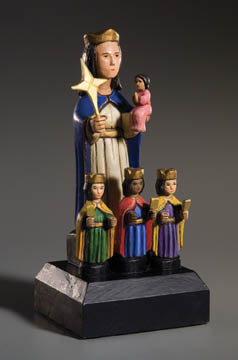
Santos, literally “saints” in Spanish, represent a centuries-old tradition of religious devotion practiced by Latino artisans. Here are three, handcarved and painted by Puerto Rican native, Carlos Santiago Arroyo of Amherst. You can see them by visiting the “Sacred Expressions” room of the exhibition, Keepers of Tradition: Art and Folk Heritage in Massachusetts at the National Heritage Museum in Lexington.

Candy Canes Still Made by Hand and Muscle

Today’s Boston Globe has a great article and video about a Lawrence, Massachusetts candy making institution — Priscilla Candies — and the seasonal specialty of making 3 foot-long candy canes. Seems like it’s time to pay a visit and interview the oldtimers who still know how to pull candy by hand. It is also interesting to learn about the Christian symbolism of the red and white striped candy cane.

css.php