A Folklorist’s Folklorist: Bess L. Hawes (1921-2009)

.

Addressing the American Folklore Society at the 1988 Centennial Meetings, Bess Lomax Hawes told a story about doing fieldwork, the sine qua non of the folklore profession. When she was teaching years ago, a student of hers had done an excellent term paper based on some folk curing beliefs which he had collected from an old lady in his neighborhood. By semester’s end he complained, “You taught me all about how to collect, Mrs. Hawes. What you didn’t teach me was how to stop collecting. That old lady lives on my block and every night when I come home, she runs out on the porch and says, ‘Hey boy, I just remembered another one!’  I keep trying to explain to her that my project is all finished, but she just won’t stop, and I’m starting to go up the alley when I go home just so I won’t run into her.”

“My dear young man,” Bess responded,  “welcome to the grown-up world. It’s a place where real actions have real results, where real people have real feelings as well as real information. And it’s a place where old ladies actually think that people who say they are interested in what they know really are interested, and issues like course requirements and semesters and quarters are really irrelevant. You’ve gotten your A. Now you start to pay back.” (excerpt taken from Public Folkore, edited by Robert Baron and Nicholas R. Spitzer, 1992, page 68.)

Bess Lomax Hawes, a folklorist of national renown, died last Friday. Today’s Boston Globe pays tribute to her and the little piece of local folklore she left behind. During the 1940s, while raising her family in Cambridge, Bess sang with local folk groups and tried her hand at songwriting. Today’s Boston Globe story focuses on “Charlie and the MTA,” a song Bess co-wrote with her friend Jacqueline Steiner. The political ditty poked fun at the Massachusetts Transit Authority’s complicated fare system and went on to become a hit.

In addition to a career as a performer and teacher, Bess Lomax Hawes was a remarkably effective arts administrator. Rocco Landesman, current Chairman of the National Endowment for the Arts, reminds us that, during her 16-year tenure as Director of the NEA’s Folk & Traditional Arts Program, Hawes inspired her colleagues to re-imagine how a federal agency might serve often overlooked artists and communities across the nation. Hawes was largely responsible for creating this country’s version of the Japanese Living National Treasures program. The first National Heritage Fellowships were awarded in 1982 and they continue to be the country’s highest honor awarded to individual artists working in the traditional arts.

Finding, documenting, presenting, and honoring traditional artists is work that is carried out at the grassroots level. Bess was the driving force behind establishing the network of public folklorists we have in the United States today. My colleague Jeff Titon recalls the United States map Bess kept in her office: “Whenever a folklorist got a job in one of those states, a colored push pin went into the location. She used to point to the map with great pride as the number of pins, and states, and public folklorists, increased. It was as if this gentle lady was mapping an occupying army moving into positions around the country.”

Indeed it was Bess who took Jeff aside in the early 1980s and began asking him why there wasn’t a position for a state folklorist in Massachusetts. Jeff writes, “It wasn’t long before Jane Beck [founder of the  Vermont Folklife Center] and I were lobbying at the state arts council, telling them that the NEA would fund a position for a state folk arts coordinator for three years, and that when the arts council saw how valuable it would be to have one, they would surely pick up the funding from then on. . . That is how the position that Maggie Holtzberg now holds with the Massachusetts Cultural Council originated. The pattern had been established before Massachusetts, and it was repeated in state after state.”

Many public folklorists, like myself, who were lucky enough to enter the field in the 1980s, were mentored by Bess.  We looked to her for advice and wisdom. This is why, during the past few days, my email box has been overflowing with “Bess stories” — moving memories of this pioneering, principled, formidable, feisty, fun-spirited woman. We are often reminded of her in our daily work and will miss her presence in the world profoundly.

That’s a familiar face . . .

Guest blog from folklorist Millie Rahn:

Old friends Betsy Siggins, Bob Dylan, and Maria Muldaur backstage at the Wang Theatre, Boston, Nov. 15, 2009. Betsy is the founder of the New England Folk Music Archives and was a mainstay of the Club 47 in the '60s. Photo courtesy of Siggins Collection, New England Folk Music Archives.

The New England Folk Music Archives, based in Cambridge, was launched earlier this year with collections that reach well back into the last century.  Some of the Archives’ strongest collections have to do with the folk revival of the late 1950s and 1960s in and around Cambridge and Boston.  But the roots of the music  scene, then and now, reach well back into the 19th century and came out of a long, local tradition of interest

in folk music, folksong collecting, and cultural revivals.


Club 47, considered the epicenter of the revival, started as a jazz venue and coffeehouse in 1958, but soon joined the folk music boom. Club 47 launched regional performers such as Joan Baez, the Charles River Valley Boys, Eric von Schmidt, Tom Rush, and the Kweskin Jug Band, who mined many early recordings and song collections. Others like Jackie Washington and Taj Mahal drew on their families’ Puerto Rican, Caribbean, and African-American traditions.  Club 47 also introduced audiences to earlier generations of southern roots artists from the 1920s and 1930s such as Maybelle Carter, Mississippi John Hurt, Bill Monroe, and Muddy Waters.

During the month of November, the New England Folk Music Archives has partnered with the Harvard Square Business Association and its members to exhibit photographs and memorabilia from the collections in store windows and restaurants around the Square.

This Sunday, November 22 at 7 p.m. the Brattle Theatre will have a rare screening of Festival!, one of the essential documentaries of the early Newport folk festivals, with a reception with filmmaker Murray Lerner afterwards.

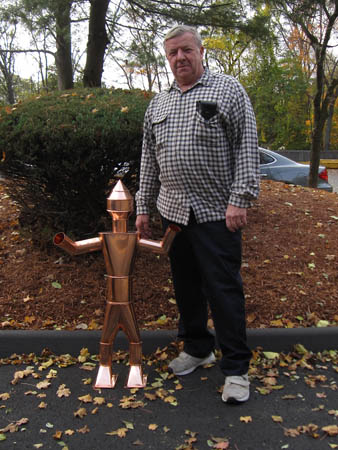
Hand crafted “copper man” finds new home

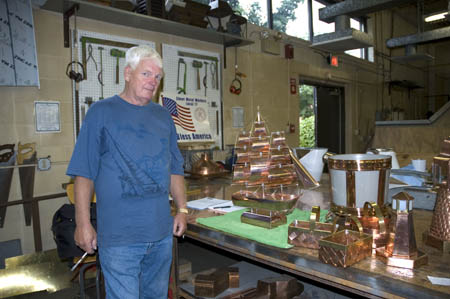
About two years ago, we visited the training center of Sheet Metal Workers Union Local #17 in Dorchester. It was there that I met with retired sheet metal workers who were constructing a tin man for our exhibition, Keepers of Tradition.  Though we had only asked for one figure, we were surprised to learn that they chose to make three, eager to demonstrate their ability in working with three different types of metal: 16-ounce copper, glavanized steel, and stainless steel.

William Walsch, Dan Hardy, Richard “Dick” Clarke, and Glenn Walker – all retired sheet metal workers – would spend more than 50 hours each fabricating the tin men. The making of tin men was once taught in apprenticeship classes. The skills required in making a tin man include all those necessary to become a journeyman: layout, scribing, cutting, folding, rolling, bending, riveting, soldering, and filing metal.

Figurative sculptures known as tin men were made by metalsmiths long before the tin woodman in the Wizard of Oz appeared onscreen. Metalsmithing is an ancient trade. For centuries, tin men have been used as trade signs advertising a metalsmith’s shop or wares.

These life size sculptures, emblematic of trade skill, were on display in the opening section of our exhibition. Once the show closed in June of this year, the tin men found a permanent home in the training center of Local Union #17.

I missed them. And, truth be told, I wanted one.

Having gotten to know some of the retired sheet metal workers, I learned that making decorative objects serves as an outlet for creativity and affirmation of membership in a highly skilled trade. In fact, when we visited the training center, in addition to the tin men, the men had brought in half a dozen creations for our consideration: baskets, lighthouses, boxes, and a clipper ship.

So, with the blessing of the training center coordinator, I contacted Richard “Dick” Clarke to see if I could commission a tin man of my very own. Two months later, I drove to his home in Stoneham where I was delighted to see the finished product.

Boston Percussive Dance opens

MCC artist fellow Kieran Jordan and tap dancer Julia Boynton have opened a new dance studio for percussive dance in Central Square, Cambridge, Massachusetts. It is encouraging to see this new generation of dance instructors working with such enthusiasm. Best of luck to you.

Cranberries: biography of the state’s signature fruit

Colleague and fellow folklorist Millie Rahn brings us this guest blog:

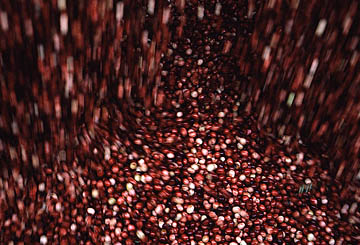
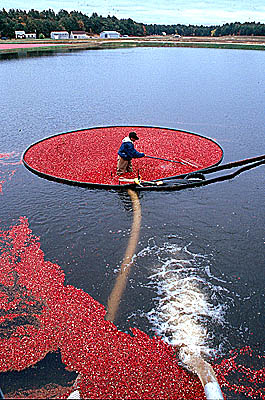
Steve Cole was introduced to cranberry growing through his great uncle, who spent a lifetime in agriculture in southeastern Massachusetts. There, Steve writes, he learned about the local crop “via an irrigation system that needed installation.” He adds, “For some, the cranberry has provided a comfortable living for five generations; for others, only enough money to make it through each winter. When something so dominates the lives of people, it is worth knowing about.”

Steve and his wife, photographer Lindy Gifford, are the authors of The Cranberry: Hard Work and Holiday Sauce, just published by Tilbury House Publishers in Maine. Steve and Lindy did much of their research in the early 1980s, while living in Wareham, near where Steve grew up. The book is based on interviews with cranberry growers in Plymouth County and Cape Cod, as well as extensive historical research. It is illustrated with contemporary and historical photographs and documents drawn, in many cases, from archival collections throughout Massachusetts.

Steve and Lindy recently held a launch party and book signing at the Ansel Gurney House in Marion, and also appeared in the book tent at the Working Waterfront Festival in New Bedford, which this year featured discussion of issues shared by fishermen and farmers.

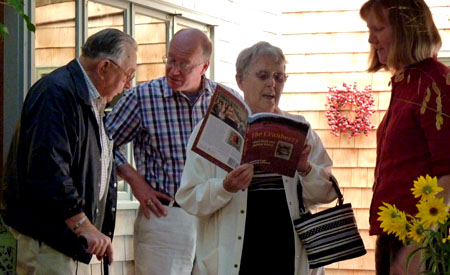
Photo (l to r): Cranberry grower Wilho Harju, author Stephen Cole, Lillian Harju, and author Lindy Gifford at the book launch in Marion in late September. Wilho and Lillian Harju were among those interviewed about Finnish people’s contributions to cranberry growing. Photo by Phoebe Cole.

The authors will be signing their book throughout the fall, including the following dates and locations:

Saturday, October 10, 11 am

Cranberry Harvest Celebration at A.D. Makepeace Co. headquarters

Tihonet Village, Wareham

Saturday afternoon, November 7

Titcomb Books on Route 6A in East Sandwich

Sunday, November 8, Noon-2 pm

Where the Sidewalk Ends Bookstore on Main Street in Chatham.

More dates will follow at Plimoth Plantation, and in Boston and Concord.

Fishermen and Farmers Find Common Ground at Working Waterfront Festival

Great weather and great programming! We suggest heading down to New Bedford this weekend for the Working Waterfront Festival. If you haven’t guessed, this year’s theme is surf and turf. In promoting the festival, organizers point out that “Fishermen and farmers share a deep knowledge of, reverence for and dependence upon the natural world. Both groups pass traditional skills and knowledge from one generation to the next, often incorporating new technologies alongside traditional practices. And both communities face many of the same economic, environmental and political challenges.”

In addition to live maritime and ethnic music, there will be an open air market featuring local produce and fresh seafood and cooking demonstrations, occupational demonstrations of fishing and farming skills, tours of fishing boats, author readings, and kid’s activities.

NEA Heritage Award Fellows

Ever since 1982, The National Endowment for the Arts has awarded National Heritage Fellowships, the nation’s highest honor in the folk and traditional arts. Although this year there are no Massachusetts artists in the mix, there have been in the past. Fellows from the Bay State include: Cape Breton fiddler Joe Cormier (1984), tap dancer extraordinaire Jimmy Slyde (1999), Irish American button accordionist Joe Derrane (2004), and folklorist Nancy Sweezy (2006). Be sure to check out their profiles on our online archive.

We have also nominated several other individuals. In fact, if you want to nominate someone, you can by submitting a letter and support materials to the NEA.

Banjo and Fiddle Contest in its 30th year

This Saturday, September 12 marks the 30th Lowell Banjo and Fiddle Contest at Lowell National Historic Park. Whether you are an accomplished musician planning on entering the competition, or you come to experience the music-making as an observer, this annual event promises to be entertaining. In addition to the performing contestants, some great music will undoubtedly take place in informal practice/jam sessions behind the stage and along the perimeter of Boarding House Park. Cash prizes and trophies will be awarded but contestants must follow these rules.

MCC Supports the Preservation of Traditional Arts in Massachusetts

We are delighted to announce this year’s Apprenticeships. The following five Master Artists will work with their apprentices in a variety of music and craft traditions.

Monotype Typecasting and Letterpress Printing John Kristensen of Firefly Press, Master Artist, and Jesse Marsolais, Apprentice

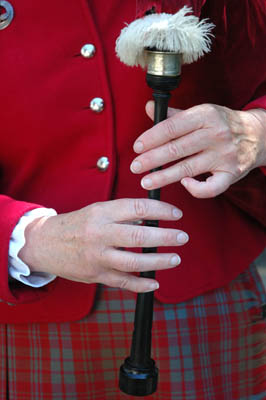
Piobaireachd, Great Highland Bagpipe Nancy C. Tunnicliffe of Lanesboro, Master Artist, and Sean Humphries of Millville, Apprentice

Mridangam: Carnatic South Indian Drumming Pravin Sitaram of Shrewsbury, Master Artist, and Ullas Rao of Westwood, Apprentice

Cambodian Dance Samnang Hor of Lowell, Master Artist, and Sopaul Hem of Melrose, Apprentice

Tabla: North Indian Drumming Chritstopher Pereji of South Attleboro, Master Artist, and Nisha Purushotham of Roxbury, Apprentice

Apprenticeships are a long-standing method by which an individual learns skills, techniques, and artistry under the guidance of a recognized master. Applicants were reviewed by a panel of experts who evaluate the artistry of the master artist, skill level of the apprentice, rarity of art form, appropriateness of the pairing, and work plan. They are expected to offer a community presentation at the end of the year-long apprenticeship.

“Old-school” visitor comments arrive in the mail

A big box of photocopied comment cards arrived in the mail today. Visitors to Keepers of Tradition: Art and Folk Heritage in Massachusetts took the time to scribble down their reactions on printed comment cards. From time to time, we will share them with you here.

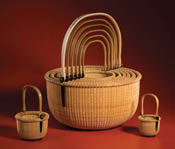
A 38-year-old woman from Belmont, MA writes: “I was so impressed by the intricate design and pattern of the baskets. It also reminds me of how ‘green’ cultures were that used these beautiful baskets in farming — reusing natural materials (no ugly plastic bags!)”

One of the cards asked: If you could learn from one of these keepers of tradtition, who would it be? Why? A 64-year-old man from Woodstock, CT answered: “Rob Napier, Newburyport. The man is good and I like the choice of the working boat. It’s the working men laboring unhseen that make the trade great.” And a 12-year-old girl from Canton, MA answered: “The art of tap dancing because it is a way of dancing and making music.”

A 47-year old woman from Shrewsbury wrote: “We enjoyed the entire exhibit, but my son especially enjoyed seeing the Cambodian crafts and dance, as he was adopted in Cambodia and is proud of his cultural heritage.”

And an unidentified person answered the question, Has this exhibition changed your idea of what folk art is? “Yes. I always thought it was boring, but it isn’t.”

css.php