Sign Maker to Give Artist Demo

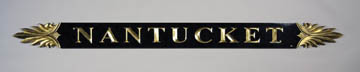
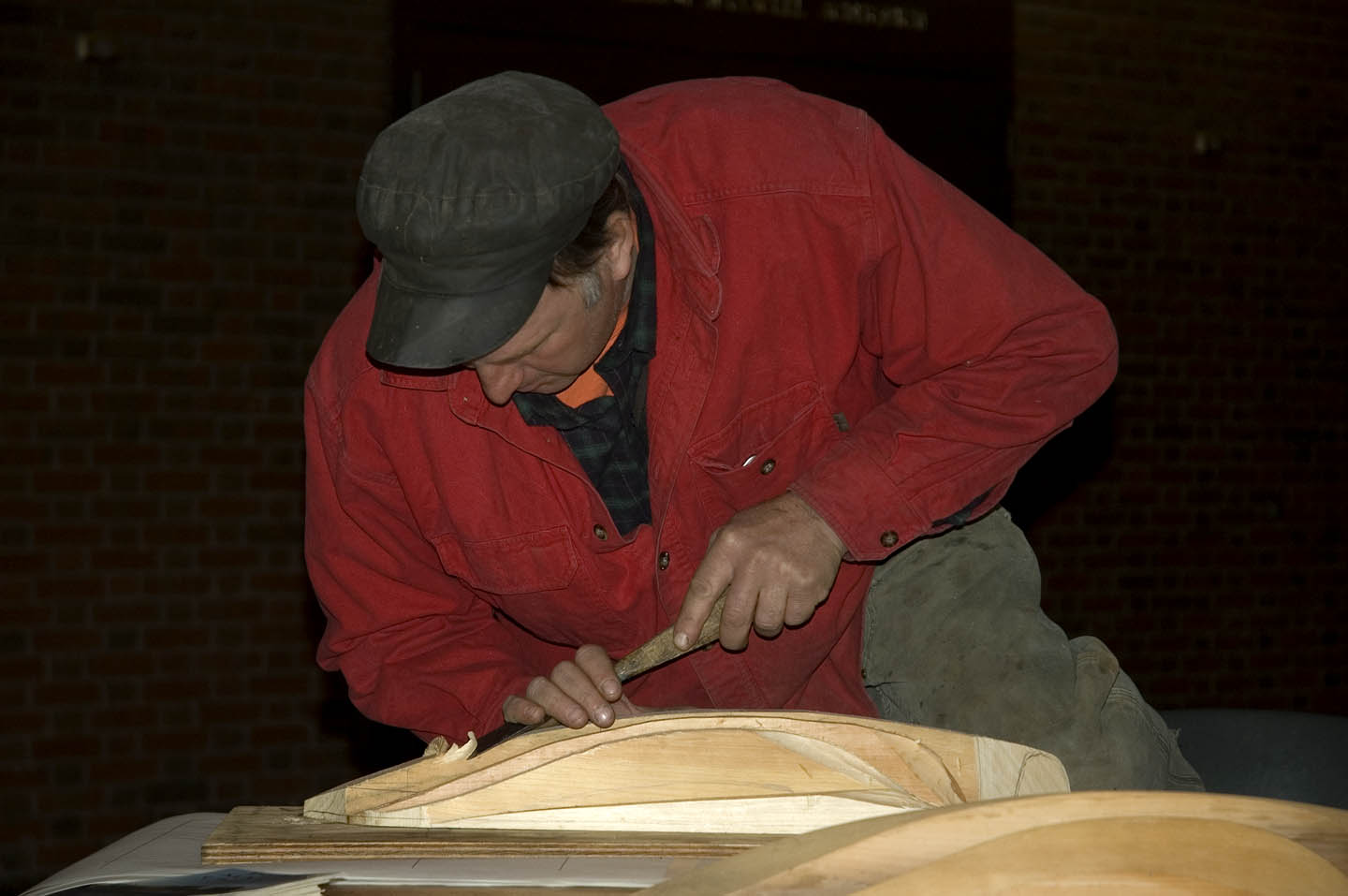
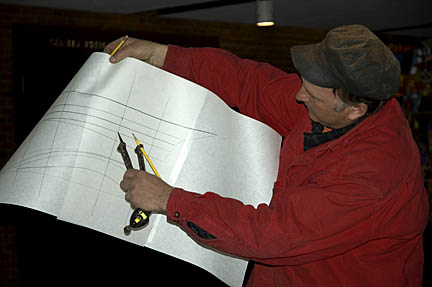
We first wrote about Nicholas Lonborg back in September, but it’s worth repeating, since he will be doing an artist demonstration a few days after Christmas at the National Heritage Museum. Lonborg has mastered the art of hand carved signs featuring V-cut letters and the application of gold leaf. He specializes in highly finished quarterboards, like the one he is working on here. Once associated with ships, quarterboards now mark personal property, especially on the seafaring island of Nantucket and other coastal communities.”

Come watch Lonborg work, ask questions, and hear him talk about his craft on Sunday, December 28th from 1:00 p.m. – 3:00 p.m.

Nicholas Lonborg outlining in black. Photo by Maggie Holtzberg

Concert footage of “Keepers of Tradition” now on You Tube

Film footage from the October 4 concert at the National Heritage Museum is now posted on MCC’s very own channel on You Tube. You can watch a Scottish bagpiper, Puerto Rican family band, Cambodian dance troupe, Fado singer, auctioneer, and Franco-American fiddle and stepdance. Thanks to Mathew Ferrel for filming and editing the segments. We hope to add footage from our June 7 concert in the near future.

Fiddle tune that truly soars

For those who attended our October 4 concert at the National Heritage Museum, a highlight of the evening was Donna Hébert’s rendering of “The Raven’s Wing” on fiddle. The story behind this composition of Donna’s is as moving as the soaring, sorrowful melody. To hear more about it, go to Donna’s fiddleblog post.

“Keepers of Tradition” exhibition extended through June 7, 2009

The National Heritage Museum, in collaboration with the Massachusetts Cultural Council (MCC), is pleased to announce it is extending “Keepers of Tradition: Art and Folk Heritage in Massachusetts” through June 7, 2009. ” The exhibition has been hugely popular with visitors,” said Hilary Anderson Stelling, Director of Collections and Exhibitions, “and when the opportunity to extend the show presented itself, we didn’t hesitate. We are very grateful to the artists for allowing us to display these treasures a bit longer.”

“Keepers of Tradition” features more than 100 works by 70 Massachusetts artists who preserve and revitalize deeply rooted traditions. Reflecting the populace of Massachusetts, their art takes many expressive forms-from Native American basketry to Yankee wooden boats, Armenian lace, Chinese seals, Puerto Rican santos, and Irish music and dance. Passed down from person to person within both long-settled and new immigrant communities, traditional art involves the shaping of deeply held cultural values into meaningful artistic forms. These keepers of tradition are recognized in their communities as outstanding practitioners of craft, music, dance, and sacred arts. Yet much of this work is hidden to the public at large, remaining essentially unknown beyond the local community in which it flourishes.

More information about the exhibition, including an audio tour, can be found at the Museum’s web site. The official MCC web site for the show can be found at www.massfolkarts.org.

Expressing the Shape of a Boat

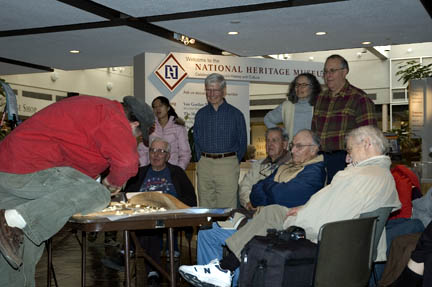
A nice crowd gathered recently to watch and hear Harold A. Burnham talk about the tradition of using half hull models as design tools from Harold A. Burnham at the National Heritage Museum. He explained the process of sketching the model out on a block of wood, which is made of lifts. These lifts come apart and represent sections of the hull. “The shape of the model is the shape of the boat.”

Once chiseled and sanded to perfection, the lifts are taken apart and used to express a three-dimensional shape on a two-dimensional piece of paper. These lines are eventually scaled up to size on the moulding loft floor. Harold notes, “If you are an accomplished boat designer or have the experience studying these lines, you can read the lines plan and know what the lines are saying.” (Sort of like a composer reading a score and hearing the piece of music in her head.) He goes on to say, “But the alternative is to just hold up a block of wood and say, “This is what it looks like.”

“What we’ve developed here is a series of points for the widths at the correct height. Then by connecting the dots, in a fair line, you can see the shape of the model. If you scale that up full scale, that shape is what you use to make the moulds to build the frames for the boat. Basically, we do what I just did when we’re lofting the boat, we do that full scale on what they call a mould loft floor. That’s how you use the half model.”

Photos by Maggie Holtzberg

Thanksgiving Soft Sculpture

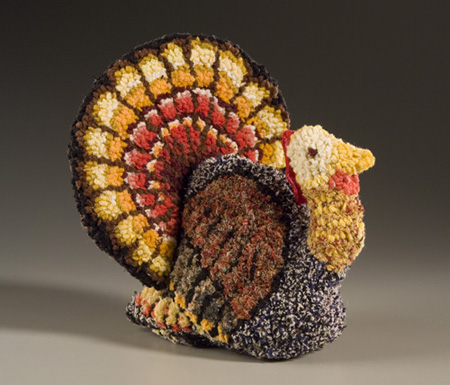
Soft hooked rug sculpture by Jeanne Fallier

This soft sculpture was made by Jeanne Fallier, whose nimble fingers have produced hundreds of magnificent hooked rugs and soft sculptures. Happy Thanksgiving!

Photo by Jason Dowdle

Wooden boat builder demonstrates the use of half models

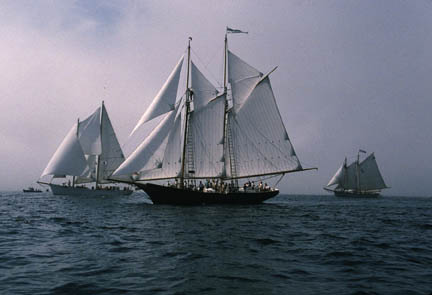
Ever wonder how shipwrights with little or no drafting skills designed large sailing vessels, like the one pictured above? A key tool was the half-hull model and it is still used today. It’s basically a model that, once perfected, can be taken apart and used to draw full-scale lines on the lofting floor.

Come hear wooden boat builder Harold A. Burnham explain this tradition which developed in Essex shipyards over 200 years ago. Burnham will be giving an artist demonstration Saturday November 22 from 1:00 ;.m. to 3:00 p.m. at the National Heritage Museum. (Free event)

Music and Food are inextricably linked at Family Restaurant

Ever since hearing Grupo Canela at the National Heritage Museum on October 4th and learning that they perform each weekend at their family restaurant in Westfield, I wanted to go. This past Friday, four of us drove out from Boston. We arrived around 5:30 and decided to walk around downtown before going into the restaurant. With its wide streets and empty storefronts scattered in amongst the businesses, Westfield has the feel of a town that has seen some hard economic times.

Upon entering the restaurant, I introduce myself to a young woman behind the counter who turns out to be Alexa Santiago, the oldest daughter of the Santiago family. Welcoming and astonishingly cheery, she ends up doing the lion’s share of waiting tables and serving on this evening. She takes peoples orders like she is hosting a family meal. If someone asks for the restroom, she tells them, “You have to go through the kitchen, just like you’re at home.” Alexa introduces me to Carmen Santiago, Ismael’s wife.

Born and raised in Corozal, Puerto Rico, Carmen and Ismael grew up and went to school together. Soon after graduating high school in 1967, they left Puerto Rico for Hartford, Connecticut in order to find work. After a few years, the Santiagos moved to Holyoke and eventually settled in Westfield. They have been running the restaurant in its current location since 1999. Like many immigrants, they had every intention of going home but with six children and seven grandchildren, they have built a life here. “We thought we’d go back home,” Carmen says, “but the family grows.”

The restaurant’s décor is festive and full of intriguing artifacts – like a Puerto Rican version of Cracker Barrel. Colored glass lanterns and hanging coconuts, guitars, congas, and cuatros, maps of Puerto Rico, vintage beer signs, knick-knacks and figurines, and framed photos of Puerto Rican baseball players. Like many of the storefronts along Elm Street, this one has a pressed tin ceiling. There are only ten tables. A few diners appear to be regulars. Some sit, others do take-out, including a local policeman on his beat.

The kitchen is visible from the dining room and the sounds and smells of cooking are enticing. Ismael has just taken a pork roast out of the oven, its fatty skin crisped to a golden brown. He lifts lids on giant skillets to reveal yellow rice and chicken fricassee. Ismael nods toward the later and inhales, “Ahh . . .that’s like dying and going to Heaven.”

By 6:45pm, Ismael is anxious to start playing. Beatriz grabs a microphone. Josúe is out back somewhere, so a customer from the audience steps up to play bongos. By the next number, Josúe arrives and takes up the congas. They play from 7:00 p.m. to 8:30 p.m. and then take a break. Listen to a live recording here.

This is the place to see this music. The food and music are inextricably linked. Everyone has a role – singing, playing percussion, taking orders, singing, preparing and serving food. The youngest of six, Marcos, is in his early twenties. He sings close harmony with his sister Beatriz, lovingly throws his arms around his mother’s neck, and helps out in the kitchen. Here you see him using a mortar and pestle to crush garlic, lime, and cooked plantain, which is served with a cold seafood salad. I ask Carmen about recipes – Beatriz answers, “They are more of our country, than just our family.”

Santiago’s Family Restaurant is located at 34 Franklin Street in Westfield, Massachusetts. The live music is only on Friday and Saturday evenings. Phone: 413.562.0210

Photographs by Maggie Holtzberg

Friend of “the folk” appointed role in Obama transition team

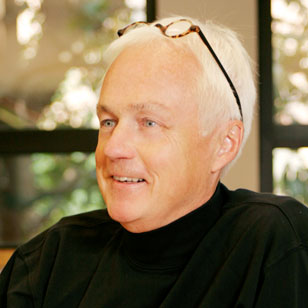
It is heartening news to learn that Bill Ivey has been appointed to lead the Obama transition team with responsibility for the National Endowment for the Arts, the National Endowment for the Humanities, and the Institute of Museum and Library Services. Ivey has had a distinguished career as a folklorist. He currently directs the Curb Center for Art, Enterprise, and Public Policy at Vanderbilt University, and has served as director of the Country Music Hall of Fame in Nashville. He is past president of the American Folklore Society, and chair of the National Endowment for the Arts from 1998 to 2001.

Grupo Canela

Santiago\'s Family Restaurant

A native of Puerto Rico, Ismael Santiago has been living in western Massachusetts for nearly 30 years. For the past 12 of them, he has led Grupo Canela, a family band which plays jibaro music. This style of folk music — a blend of Spanish, West African, and Taino influences, first developed in the rural, mountainous interior of Puerto Rico. Grupo Canela also plays salsa. Ismael and his family run Santiago’s Family Restaurant in Westfield, Massachusetts, which offers authentic Puerto Rican food. On Friday and Saturday evenings, members of the nine-piece group come out of the kitchen, play a couple of pieces, and then go back in to continue cooking and serving. After a certain point, they all come out to play again, until late into the night.

We coaxed members of Grupo Canela to not only come out of the kitchen, but onto the stage at the National Heritage Museum earlier last month. Their set was a big hit at the concert we held in conjunction with our ongoing exhibition, Keepers of Tradition: Art and Folk Heritage in Massachusetts. Listen to a taste of Grupo Canela here (5MB) playing “Son de la Loma.

Next on the docket is a trip out to Santiago’s Family Restaurant to hear and taste this cultural experience in its locale.

Have a comment? Send me an email maggie.holtzberg@state.ma.us

css.php