Traditional Artists win MCC Fellowships

At first glance, this year’s two fellowships in the traditional arts seem a study in contrasts. One represents an age-old Yankee craft; the other, an ancient West African musical tradition.  Yet wooden boat builder Harold A. Burnham and Malian balaphon player Balla Kouyaté share something in common. Each individual is carrying on a traditional art form passed on through his own family lineage. Harold A. Burnham’s boat building ancestors arrived in Essex, Massachusetts nearly 400 years ago. Balla Kouyaté, who came to the United States just a decade ago, was born into a musical family whose artistic lineage dates back 800 years. And their traditions are stronger for it.

In addition to performing in concert halls and clubs, Balla is ever present playing at weddings, baptisms, and other domestic ceremonies within the West African immigrant communities of Boston, New York City, and beyond. As for Harold Burnham, he has essentially revived a once dormant shipbuilding technique, and in doing so, has reconnected a town to its own shipbuilding heritage. More than a revivalist serving a small market of weathy buyers who romanticize the past, he is an innovative craftsman working fully within the local wooden boatbuilding tradition.

The MCC has also granted finalist awards in the traditional arts to the following individuals:

Sunanda Sahay specializes in a style of folk painting originating in the Madhubani region of North India.

Sophia Bilides is a master performer of Smyneika, a heartfelt and highly ornamented singing style of Greek Asia Minor heritage.

Ivelisse Pabon de Landron makes traditional Puerto Rican black dolls as a way of honoring her ancestors — Puerto Rican women of African descent and their contribution to cultural history.

Sridevi Ajai Thirumalai is an acclaimed Bharathanatyam dancer and founder of the Natyamani School of Dance.

The next deadline for Artist Fellowships in the Traditional Arts will be Fall 2011.

A decade later . . . remembering the workers of the Big Dig

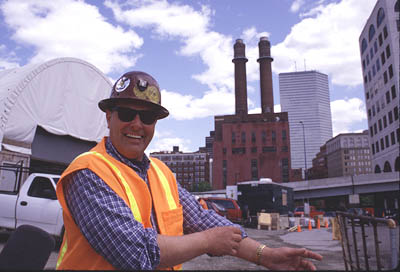
It seems like just yesterday that our Boston streets were continually disrupted by the Big Dig. Back in 2000, construction on roadways, tunnels, and bridges was in full swing. Tunnelworkers, crane operators, pile drivers, ironworkers, carpenters, and electricians labored to replace an ugly and dangerous elevated highway and replace it with a 10-lane underground expressway. Now that the tunnels are tiled and the traffic is flowing, we thought it was a good idea to remember these laborers’ contribution.

Listen here as we venture down the “Glory Hole “and speak with Sand Hogs Steve Shepardson and Dominic Mazzeo. (This 10-minute radio segment originally aired on WUMB in 2001.)

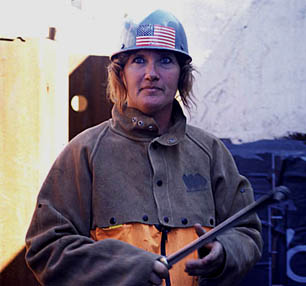
Though their numbers were small, women had a consistent presence on the Big Dig. Sally Addison joined the Piledrivers Union in 1993 and worked on the Big Dig until it was completed in 2006. When asked how her grandchildren would be able to appreciate her role in the Big Dig, Sally said, “You can see what I’ve done.” We can see what she, and thousands of other Big Dig tradespeople, have done. Let’s not take their contributions for granted.

All photos by Maggie Holtzberg

Transmitting knowledge one apprentice at a time

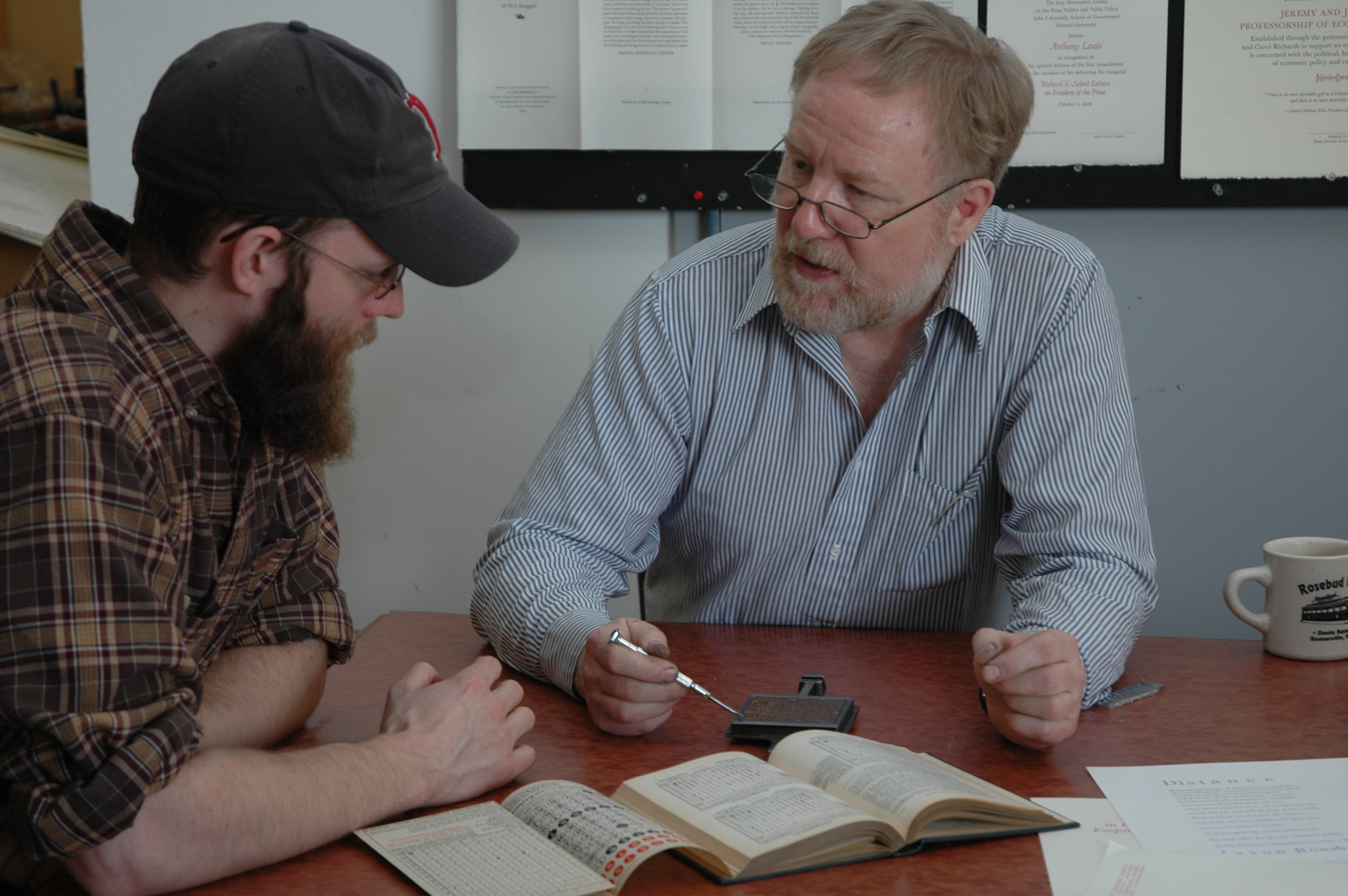
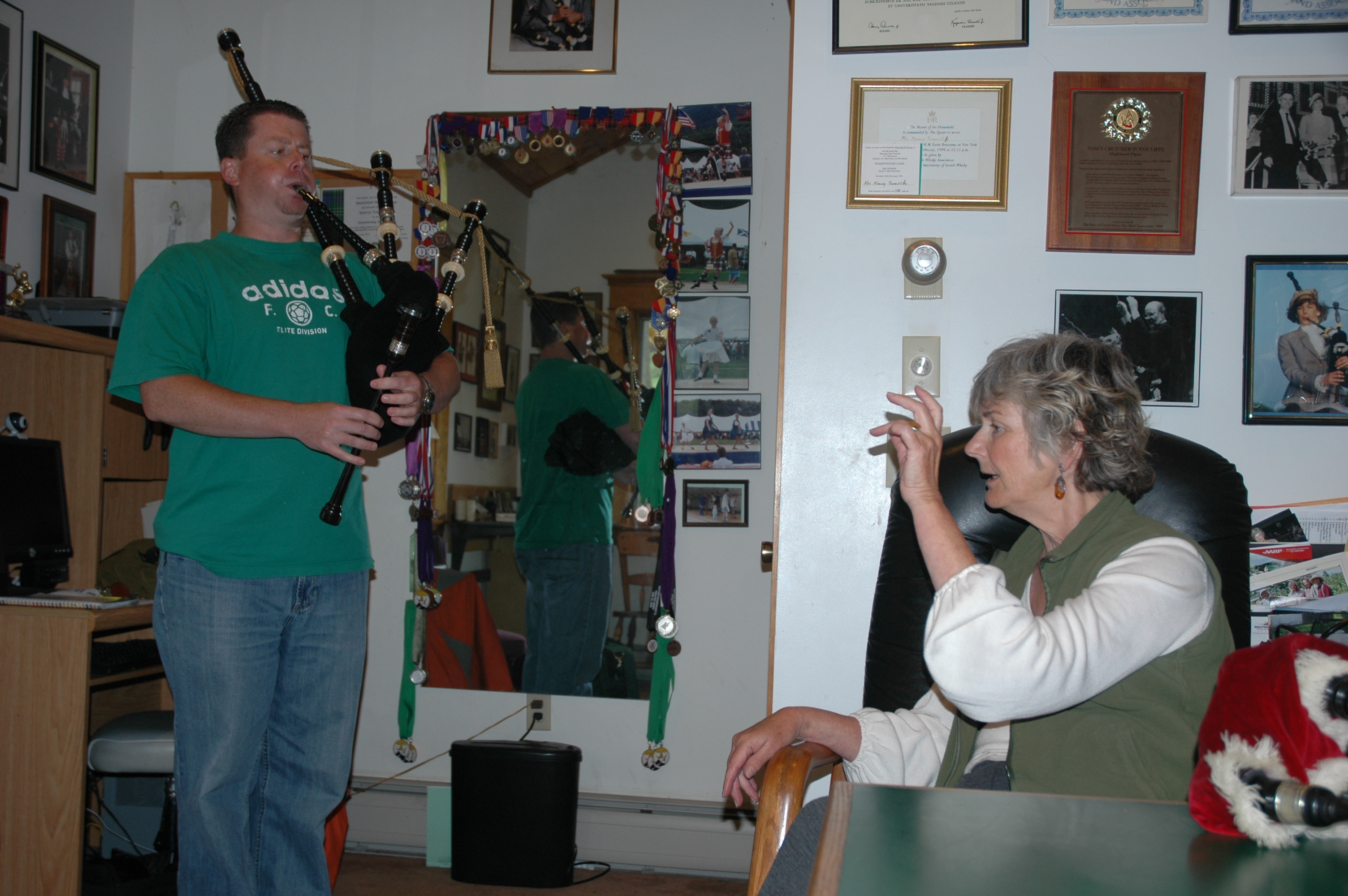
Mastering the intricacies of an industrial craft or perfecting the nuances of an ancient music tradition is best taught one-on-one. For those lucky enough to gain the attention of a master, subtle skills are acquired and cultural knowledge is preserved. This week’s Boston Globe shines a light on several master/apprentice pairs who are currently being funded by the Massachusetts Cultural Council’s Traditional Arts Apprenticeship Program

Hand crafted “copper man” finds new home

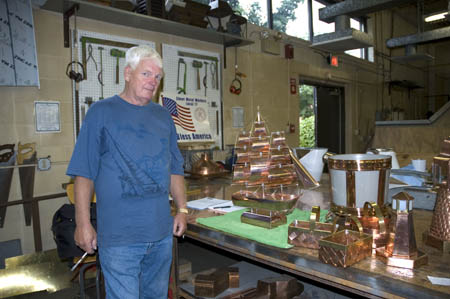
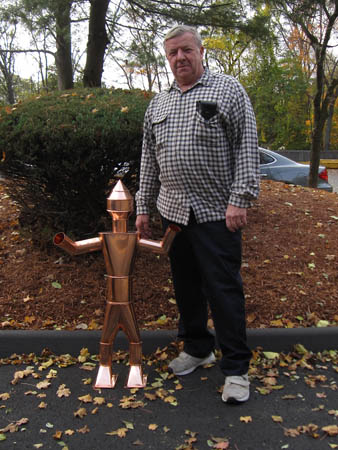
About two years ago, we visited the training center of Sheet Metal Workers Union Local #17 in Dorchester. It was there that I met with retired sheet metal workers who were constructing a tin man for our exhibition, Keepers of Tradition.  Though we had only asked for one figure, we were surprised to learn that they chose to make three, eager to demonstrate their ability in working with three different types of metal: 16-ounce copper, glavanized steel, and stainless steel.

William Walsch, Dan Hardy, Richard “Dick” Clarke, and Glenn Walker – all retired sheet metal workers – would spend more than 50 hours each fabricating the tin men. The making of tin men was once taught in apprenticeship classes. The skills required in making a tin man include all those necessary to become a journeyman: layout, scribing, cutting, folding, rolling, bending, riveting, soldering, and filing metal.

Figurative sculptures known as tin men were made by metalsmiths long before the tin woodman in the Wizard of Oz appeared onscreen. Metalsmithing is an ancient trade. For centuries, tin men have been used as trade signs advertising a metalsmith’s shop or wares.

These life size sculptures, emblematic of trade skill, were on display in the opening section of our exhibition. Once the show closed in June of this year, the tin men found a permanent home in the training center of Local Union #17.

I missed them. And, truth be told, I wanted one.

Having gotten to know some of the retired sheet metal workers, I learned that making decorative objects serves as an outlet for creativity and affirmation of membership in a highly skilled trade. In fact, when we visited the training center, in addition to the tin men, the men had brought in half a dozen creations for our consideration: baskets, lighthouses, boxes, and a clipper ship.

So, with the blessing of the training center coordinator, I contacted Richard “Dick” Clarke to see if I could commission a tin man of my very own. Two months later, I drove to his home in Stoneham where I was delighted to see the finished product.

“Old-school” visitor comments arrive in the mail

A big box of photocopied comment cards arrived in the mail today. Visitors to Keepers of Tradition: Art and Folk Heritage in Massachusetts took the time to scribble down their reactions on printed comment cards. From time to time, we will share them with you here.

A 38-year-old woman from Belmont, MA writes: “I was so impressed by the intricate design and pattern of the baskets. It also reminds me of how ‘green’ cultures were that used these beautiful baskets in farming — reusing natural materials (no ugly plastic bags!)”

One of the cards asked: If you could learn from one of these keepers of tradtition, who would it be? Why? A 64-year-old man from Woodstock, CT answered: “Rob Napier, Newburyport. The man is good and I like the choice of the working boat. It’s the working men laboring unhseen that make the trade great.” And a 12-year-old girl from Canton, MA answered: “The art of tap dancing because it is a way of dancing and making music.”

A 47-year old woman from Shrewsbury wrote: “We enjoyed the entire exhibit, but my son especially enjoyed seeing the Cambodian crafts and dance, as he was adopted in Cambodia and is proud of his cultural heritage.”

And an unidentified person answered the question, Has this exhibition changed your idea of what folk art is? “Yes. I always thought it was boring, but it isn’t.”

Making art for everyday life

After finding refuge in Lowell eight years ago, Yary Livan and his family finally own a home with a yard. Beside their light blue house on Franklin Street is a welcoming green space where Yary has created a peaceful sculpture garden. Just to the left of some blooming echinacea sits Livan’s 38-inch tall ceramic spirit house. He had patiently loaned it to us for the Keepers of Tradition exhibition, where it sat encased in a plexiglas vitrine for over a year, along with other sacred pieces of folk art.

.

Now the spirit house has found its rightful home. Yary’s wife, Nary Tith, had explained to us that in Cambodia, where Buddhists pray on a daily basis, temples, and pagodas are often built far from villages. Therefore, many people construct their own spirit houses for their yards. Typically, spirit houses are highly ornamented wood or cement structures limited to a handful of standard designs. Yary chose to make his spirit house of clay because he wanted to combine his skills as a ceramist with his Khmer heritage.

Their home is filled with Yary’s ceramic work — elephant pots, vases, and cooking vessels.

Indeed, even the kitchen table is a work of mosaic art.

This tiny grandchild is certainly growing up in a home rich in Cambodian material culture. Perhaps she will one day carry on the tradition.

Lowell Folk Festival is the place to be next weekend

Photo by Marianne Nika, 2008

This year’s Lowell Folk Festival promises to be a blast. You may already know that this event is one of the best curated folk festivals in the country — and it is free! On the last weekend in July, the whole city of Lowell morphs into one large celebration of top quality traditional music, folk craft, ethnic cuisine, and community spirit.

Among the music and dance traditions you will experience are Irish polkas and slides, Western Swing, Klezmer, Brazilian capoeira, an a capella gospel quartet, Quebecois dance tunes, Zydeco, Puerto Rican jibaro music, Tuvan throat singing, and a New Orleans brass band. Massachusetts performers include Boston Banghra, Grupo Canela, ekonting player Sana Ndiaye, the Eddie Forman Orchestera, and Branches Steel Orchestra. Fourteen Bay state artists will be demonstrating in the heritage crafts area, the majority of which were featured in Keepers of Tradition: Art and Folk Heritage in Massachusetts.

Hope to see you there!

Worldfest – the place to locate summer cultural/ethnic festivals in Massachusetts

Massachusetts WorldFest is back, and we want you to participate!

For the second straight year, the MCC and Massachusetts Office of Travel and Tourism (MOTT) have launched Worldfest, a comprehensive online listing of the rich and diverse array of ethnic and cultural festivals across Massachusetts from June through September. We again plan a summer marketing campaign to drive visitors from across New England to these events.

Worldfest includes festivals large and small, in cities and towns from Boston to the Berkshires, from Cape Ann to Cape Cod. The website includes a search engine that allows visitors to search by region, name of event and/or date.

Worldfest‘s only criteria are that participating festivals represent communities or groups of communities within Massachusetts that share a common ethnic or artistic heritage or way of life. Massachusetts is home to a host of such groups, ranging from longstanding communities from Native America and Europe to newcomers from Latin America, Africa, and Asia. Each of these, and many others, showcase vital cultural traditions through their public fairs and festivals, which deserve recognition and support.

If you would like your festival to be included, please submit this form. These listings are provided at no cost.

For more information, please contact John Alzapiedi at MOTT: john.alzapiedi@state.ma.us or 617-973-8509

Massachusetts Artist’s Work Featured in New Smithsonian Exhibition

The detail is mind boggling. And the engineering, craftsmanship, and design are just what one would expect from maritime historian and ship modeler Erik Ronnberg, Jr. He called a few months ago to invite me up to Rockport to see a model he has been working on for the past two years. The Smithsonian Institution commissioned Ronnberg to design and build a Pacific Coast factory trawler. The piece is an incredible rendering of a working factory trawler, with exacting detail. Though the hull is made of very thin wood, the majority of pieces are cast out of metal. She is modeled after the real ship ” Alaska Ocean,” which routinely catches and processes 50-100 tons of Alaska pollock in a single haul. Every fish that comes onto the factory deck is weighed and measured to ensure that the ship doesn’t exceed her quota.

Once the fish are released, they spill out into one of three holding tanks. A conveyer belt brings fish to their ultimate fate, where they end up as packaged and frozen surimi (imitation crab/lobster), rectangular fillets, or highly profitable roe. The majority of the work on the processing deck is automated. Erik has machined parts to represent the many processes that take place on this factory-on-waves: sorting, scaling, skinning, filleting, gutting, deboning, washing, cooking, compacting, freezing, bagging, loading, and storing.

Examining the many fish processing stages, you can see where the infatuation with technology comes from. The model is six feet long (scale: 3/16 in. = 1 foot) and is part of the new exhibit, On the Water: Stories from Maritime America, which opened May 22 at the Smithsonian’s American History Museum. Erik Ronnberg’s hope is that a few kids will see his model of Alaska Ocean and out of that will come the next generation of naval architects.

Falling Between the Cracks

As folkorists, we are always questioning what constitutes “tradition,” “transmission,” and “context.”

Mary Hart attended the Keepers of Tradition: Art and Folk Heritage in Massachusetts exhibition twice during its run at the National Heritage Museum. Like many visitors, she filled out a comment card — in her case, the one where we asked people to tell us about a folk art tradition we should know about. Mary described her work in the German paper cutting tradition known as Scherenschnitte.

Scherensnitte is a tradition of making decorative documents that flourished within German American farm communities in and around Lancaster, Pennsylvania from the 1750s to the 1890s. People used these cut papers for birth announcements, memorials, love letters, and baptismal certificates. Rather than put them on display, many families stored them between pages of the family Bible.

I was curious about Mary’s paper cutting, but well aware of how she didn’t fit our criteria of traditional artist. Not only did she learn her folk art from a book, she claims no German heritage, and she is what folklorists refer to as a “revivalist,” practicing her art outside of the cultural context in which it was created. After Mary and I exchanged a few emails, I picked up on her frustration of falling in between the worlds of fine craft and folk art, not fully appreciated by either.

Folklorists place great emphasis on the cultural context in which traditions are transmitted. Who one learned from is important. How someone’s work is valued within the community in which the traditional art originated and is practiced is relevant.

So what does a folklorist do with an artist who essentially learned folk art from a book, doesn’t claim any familial or ethnic connection to a tradition, and has a college degree in art? In this case, I drove out to meet with her.

Although Hart has a studio — a small and bright room off the dining room of an open plan contemporary house — she does most of her paper cutting on the dining room table. Before my arrival, Mary had brought out samples of her work, as well as magazines, craft catalogues, and books about paper cutting. She showed me examples of Scherenschnitte, pointing out what attracted her to this German style of paper cutting: the symmetry, the simplicity of the cuttings, and the historical use of recycled papers. Back when paper was not readily available, people reused old letters — not unlike the recycling of cloth in the making of pieced quilts. She also likes the fact that you don’t need specialized equipment to do paper cutting.

Mary creates her own patterns, drawing in pencil. The paper is folded in half. Using an exacto knife, she cuts only the parts that won’t be different once the paper is unfolded. Unique elements are cut only once the paper is unfolded. Her work is traditional in that she uses borders and standard subject matter (farm imagery, trees, flowers, vines). Examples of how she has introduced innovations into the tradition are by adding fruit on the trees, or using a flock of birds.

Like any self respecting artist, Mary would like to be able to sell her work for a fair price and to be appreciated. She also wants to continue being able to teach – she keeps a busy adjunct teaching schedule. Teaching grammar school students is especially gratifying, “I see the visceral pleasure they take in making something with their own hands.”

Mary Hart’s work is beautifully rendered. Is she a folk artist? The folklorist in me must point out that Hart is working in a culturally specific tradition, yet completely outside of the cultural context in which this folk art was created and is practiced. But it is beautiful work, nonetheless.

When work “falls between the cracks” it brings us back to larger questions, such as: How are the traditional arts perpetuated outside of their cultural context? How is tradition reinvented in a transplanted community?

What do you think?

Contact Mary Hart at Jeffrey.Hart@verizon.net

css.php